
What Exactly Is an FRT-15 and Why Are Shooters Buying One?




FRT-15 For Sale: Own the Legendary Forced Reset Trigger Today
FRT-15 for sale is your direct line to precision-engineered, drop-in firepower that transforms your rifle into a legal, semi-automatic speed demon without modifying a single part. This patent-pending forced reset trigger instantly doubles your shot-to-shot cadence, delivering lightning-fast follow-ups with a crisp, tactile reset that requires zero gunsmithing—just swap it in and shoot. Built from hardened steel and tested for thousands of rounds, it gives you competition-grade trigger control and unmatched cyclic performance straight out of the box, making every pull an aggressive, controlled burst of accuracy. Secure yours now and feel the difference the moment your finger touches the flat-faced shoe.
What Exactly Is an FRT-15 and Why Are Shooters Buying One?
The FRT-15 is a forced reset trigger, a drop-in replacement for your AR-15’s standard trigger group that simulates full-auto fire by mechanically pushing the trigger forward against your finger after every shot, allowing for a reset that is nearly instantaneous. Unlike a binary trigger, it fires one round per trigger pull, but the shooter’s own recoil and muscle control drive the cycle, creating a firing rate of 600–800 rounds per minute without modification to the firearm. Shooters buy an FRT-15 for sale because it delivers the adrenaline and practical speed of a machine gun for drills, competition, and sheer range enjoyment, all while keeping the rifle legally semi-automatic under current interpretation. The instantaneous reset eliminates any conscious trigger release, and training with it sharpens trigger discipline and recoil management far beyond a standard mil-spec trigger. However, the aggressive reset demands a firm, controlled grip or the shooter will inadvertently short-stroke the action, so practice is not optional. When you see an FRT-15 for sale, you are buying a force-multiplier for your existing rifle, turning every magazine dump into a test of your own mechanical rhythm.
Understanding the Forced Reset Trigger Mechanism in Plain English
A forced reset trigger, or FRT, does not simulate full-auto; it simply uses the bolt’s forward motion to mechanically push the trigger shoe back into place. When you fire, the hammer drops, and as the bolt cycles forward, a cam surface on the trigger physically resets the sear *before* your finger releases. This means you only control the release, not the reset, letting you pull through each shot faster than a traditional trigger. The key distinction is that your finger must still move for every round fired, but the mechanical push removes the “wait for reset” delay from your shooting rhythm. For an FRT-15, this forces a disciplined, flat-fingered grip to avoid bump-firing. The trigger’s reset speed is tied directly to bolt velocity, so a heavier buffer can alter the felt reset timing.
- Reset occurs from bolt carrier motion, not spring tension in the trigger.
- You must fully release the trigger between shots; it will not fire on its own.
- Keep your trigger finger rigid and pull through quickly to maintain the cadence.
- Lubrication on the trigger cam surface is critical—dry friction slows the forced reset cycle.
How This Drop-In Unit Transforms Your Standard AR-15 Platform
Dropping an FRT-15 into your standard AR-15 completely changes how the rifle feels, turning a typical semi-auto into a trigger-reset speed demon without altering your lower receiver or bolt carrier group. You simply replace your existing trigger assembly—no gunsmithing, no mods—and suddenly your stock fire control group’s sluggish reset is gone. The lever-style action forces your trigger finger forward mp5 frt trigger after each shot, so your natural recoil impulse does the work; all you do is keep steady pressure. This transforms your platform into a high-speed shooting tool where follow-up shots land as fast as you can ride the bounce. For anyone browsing an frt-15 for sale, the upgrade is pure drop-in convenience. Here’s what changes immediately:
- Your trigger pull stays crisp and light, but the rare breed triggers in stock reset becomes an active, mechanical push—no more waiting for a weak spring.
- You retain your selector’s safe/semi positions, so it’s still a legal semi-auto setup, just with a radically faster cyclic rate you control with your grip.
- Your bolt, buffer, and magazine all function as normal—this unit only swaps the fire control, so reliability stays tied to your existing build.
In short, it’s the difference between poking shots and flowing through them—your AR-15 feels like a purpose-built race gun from just one internal part swap.
Key Differences Between an FRT and a Standard Semi-Auto Trigger
The fundamental difference between an FRT-15 and a standard semi-auto trigger lies in the reset and sear interaction timing. In a standard trigger, the hammer falls, and the sear re-engages only after the trigger is https://rarebreedtriggertx.com/ fully released; the shooter must physically complete a full cycle for each shot. An FRT uses a lever-driven, mechanical delay that releases the hammer the instant the bolt carrier returns to battery, while the trigger is still held to the rear. This eliminates the need for a manual finger release between rounds. Critically, each pull yields multiple shots, but only one round is fired per bolt cycle—there is no hammer follow. The operational sequence is:
- Pull and hold trigger; hammer drops.
- Bolt cycles rearward, then forward; a sear trip lever catches the hammer during carrier movement.
- Carrier’s forward travel forces the trip wot trigger lever to release the hammer automatically, firing again without trigger release.
How to Verify Your Lower Receiver Is Compatible Before You Order
Before you hit buy on that frt-15 for sale, check your lower receiver’s trigger pocket dimensions against the FRT’s spec sheet. Most forced reset triggers require a mil-spec cut, not a billet or 45-degree design—so measure the pocket depth and pin hole spacing with calipers. Look at your hammer and trigger pin sizes (usually 0.154” or 0.170”); if yours are oversized, you’ll need bushings or a different unit. Also, confirm your lower’s selector detent channel aligns with the FRT’s cam track—some ambi lowers block the sear trip. Finally, dry-fit the trigger pack without the hammer spring if possible; if it rocks or binds, it’s a no-go. A quick compatibility check now saves you a return label and a useless part later.

Checklist of Dimensions and Pin Sizes That Matter Most
Before ordering an FRT-15, verify the trigger group’s critical pin spacing against your lower’s receiver. Measure the distance between the hammer and trigger pin holes—mil-spec lowers require a 1.190-inch center-to-center spacing, while some commercial lowers use a wider or offset pattern. Check pin diameters: standard pins are 0.154 inches, but a few lowers accept 0.170-inch oversize pins, which will not seat correctly. Confirm the trigger pocket depth and rear lug recess; an FRT-15’s housing may be slightly taller than a standard FCG. Finally, inspect the safety selector detent channel—if your lower’s channel is shallow, the forced-reset cam may bind. Use calipers for all measurements.
| Dimension | Mil-Spec Standard | Commercial Variance |
|---|---|---|
| Pin hole spacing | 1.190 in | 1.200–1.210 in (rare) |
| Pin diameter | 0.154 in | 0.170 in (oversize) |
| Trigger pocket depth | 0.300 in | 0.280–0.310 in |
Which Mil-Spec Parts Should Be Replaced Alongside the Trigger
When installing a forced reset trigger, replace the mil-spec hammer and trigger pins with anti-walk versions to prevent lateral movement, which can cause inconsistent sear engagement. The hammer itself often requires replacement, as many binary or FRT designs need a specific profile—like a lightweight or skeletonized unit—to function reliably. Swap the standard trigger spring for the manufacturer’s provided springs; mismatched tension alters reset timing. Also, replace the disconnecter if the mil-spec part interferes with the new bolt carrier’s travel, and inspect the safety selector for tolerance stacking. Finally, install a heavier buffer or stronger buffer spring if the trigger’s faster cycling exposes bolt bounce, ensuring reliable forced reset performance without misfeeds.
Common Fit Issues and Quick Fixes for a Smooth Installation
Before ordering an FRT-15 for sale, verify the trigger pocket depth and pin hole alignment against your lower’s spec sheet, as out-of-spec tolerances cause reset failure. If the trigger binds, quick fixes for a smooth installation include filing the hammer pin ears by 0.005” and polishing the disconnector ramp with 600-grit paper—never modify the sear surface. A loose rear takedown pin lug can be shimmed with a #4 washer, while excessive play in the trigger slot often responds to an anti-walk pin kit. Most “drop-in” problems trace to burrs left by the lower’s machining, not the FRT itself.
Q: What’s the fastest fix if the FRT won’t reset after installation?
A: Remove the upper, cycle the hammer manually—if it sticks, swap the hammer spring for a mil-spec one; a worn buffer weight is the second culprit.
Step-by-Step Installation Guide for Your New Forced Reset Trigger
When your frt-15 for sale order arrives, begin by clearing your AR-15 lower receiver and removing the standard trigger group. Place the new forced reset trigger into the lower, ensuring the hammer spring legs sit correctly on their pivot pins. Align the trigger’s sear engagement surface precisely with the hammer’s catch—a misaligned sear causes malfunctions. Insert the provided anti-walk pins and torque them to spec, then verify the selector moves through safe, semi, and reset positions without binding. Install the upper, charge the weapon, and perform a function check: dry-fire, hold the trigger, and cycle the charging handle to confirm the reset mechanism trips smoothly. Finally, test with live ammunition at a safe range, starting with five rounds to validate reliability. This step-by-step installation guide for your new forced reset trigger guarantees optimal performance from your purchase.
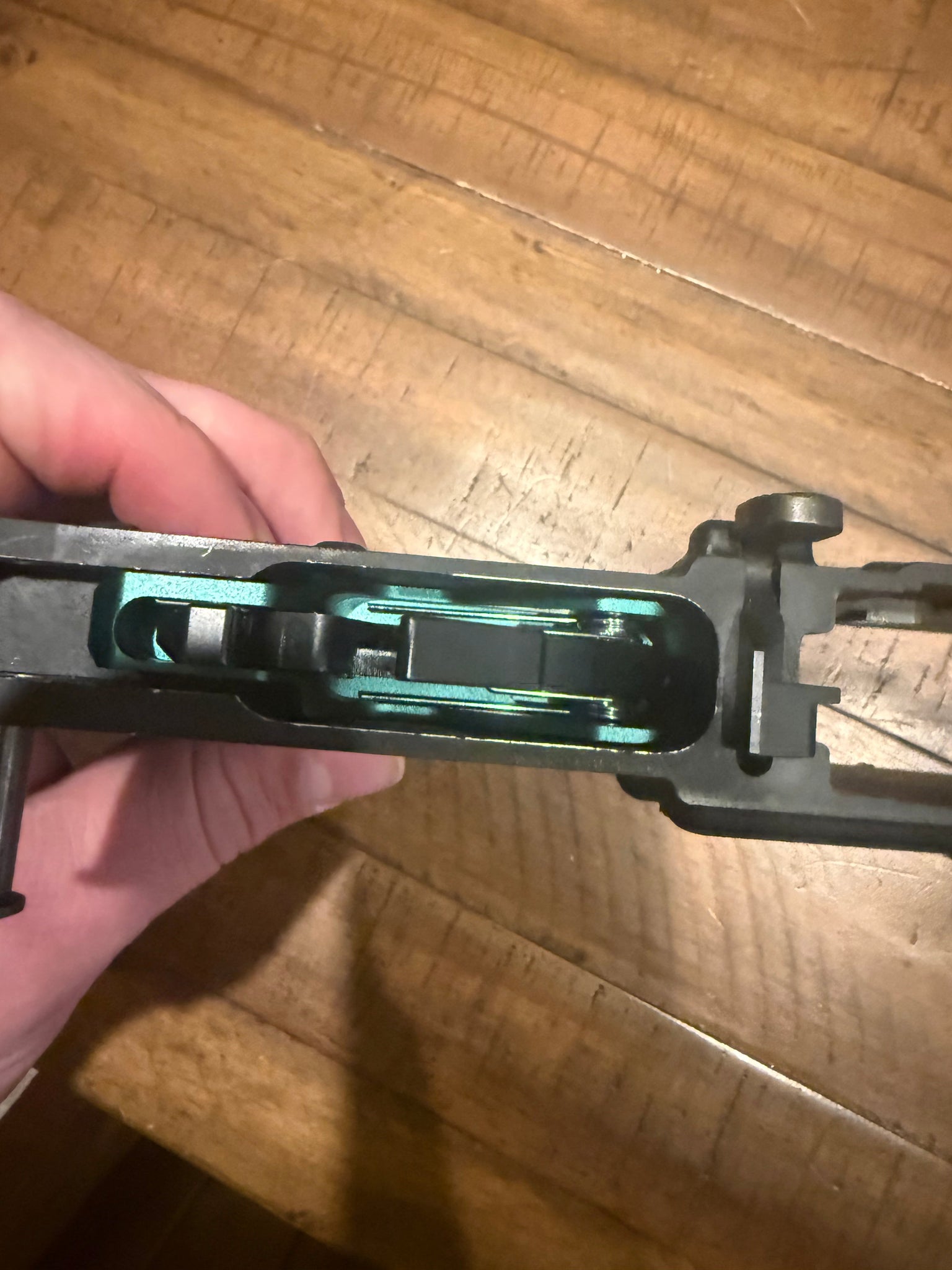
Tools You Need and How to Remove the Safety Selector Properly
Before beginning, gather a punch set, a small hammer, roll pin holder, and needle-nose pliers. To remove the safety selector properly, first ensure the weapon is cleared and the upper receiver is separated. Depress the detent pin using a punch or a specialty tool, then rotate the selector to the fire position. Drive out the selector’s retaining roll pin from left to right using the punch and hammer, supporting the receiver to avoid stress. Carefully slide the selector out, keeping the detent and spring contained with pliers. This method prevents damage and ensures your FRT-15 installation sequence proceeds without lost parts or receiver scarring.
Placing the Trigger Cassette, Springs, and Hammer Without Hassle

Dropping in your new forced reset trigger cassette starts with aligning the rear lug into the receiver’s pocket—it should seat flush without prying. Springs go in their dedicated holes; the hammer spring’s legs must straddle the trigger’s sear block, not pinch the frame. Press the hammer down and slide the pin through, making sure the hammer rotates freely before adding the selector. A tiny dab of grease on the hammer pivot prevents binding during the first hundred resets. If the cassette rocks, you’ve missed a lug—pull it out and re-seat, never force it.
- Use a slave pin to hold the hammer and trigger together during assembly.
- Check that the disconnector spring sits upright before closing the cassette.
- Rotate the hammer fully rearward twice to confirm the trigger resets smoothly.
Function Testing Safely at Home—How to Spot a Bad Install
After installing your FRT-15, function testing at home begins with a clear, empty, and cleared firearm—confirmed three times. Cycle the action manually to feel for binding, grit, or uneven resistance; a smooth, consistent pull suggests correct seating. Next, perform dry-fire function checks with snap caps, listening for a crisp reset and watching the trigger return fully forward. Spotting a bad install often shows up as a trigger that sticks rearward, fails to reset, or requires excessive force—any of these means the trigger pack or hammer pin is misaligned. A properly installed forced reset trigger should mimic a binary’s crisp break without any spongy hesitation.
- Check for trigger creep or over-travel beyond factory specs.
- Verify the hammer follows the bolt correctly during slow manual cycling.
- Look for unusual wear marks on the trigger pocket after 20 dry ps90 frt trigger cycles.
- Confirm the safety selector engages and disengages without rubbing the trigger bar.
Getting the Fastest, Most Reliable Performance From Your FRT
To get the fastest, most reliable performance from an FRT-15 you’ve purchased, first verify the trigger pocket and hammer pin fit are within spec—slop here causes reset drag. Use a high-tension hammer spring and a lightweight, mil-spec BCG; pairing them reduces the bolt’s dwell time, letting the sear trip crisply. Lubricate the FRT-15’s cam track with a thin grease, not oil, as oil flings off and induces hesitation after 200 rounds. Dry-fire practice with snap caps is non-negotiable to break in the sear surfaces, but only after confirming the hammer follows the bolt’s carrier tail exactly—misalignment will shave the cam. For sustained fire, swap to a tungsten buffer to control carrier bounce, which is the main cause of double-fire or stoppage. Your FRT-15’s reliability ceiling is set less by the trigger itself than by the buffer weight and ammo’s rim thickness, so test several brands before trusting one. Keep the trigger’s reset spring clean, and you’ll hold sub-20ms splits without a single malfunction.

Proper Grip and Trigger Finger Technique to Maximize Reset Speed
To get the most out of your FRT, your grip and trigger finger need to work as a single, relaxed unit. Keep your support hand pulling rearward on the frame while your shooting hand stays firm but not white-knuckle tight—tension slows your finger. Position the *pad of your index finger* on the trigger, not the joint, so you can ride the reset without over-travel. Let the trigger slap forward naturally; don’t chase it. Your finger should barely lift, just enough to let the sear catch, then press again with a smooth, quick snap. This minimizes the time between resets and keeps your muzzle stable.
Breaking-In Period: How Many Rounds Until It Feels Smooth?
Most FRT-15 triggers feel gritty or stiff for the first **200 to 300 rounds**, but the true smoothing point lands around 500 rounds. During this break-in, the hammer and sear surfaces wear against each other, shedding high spots and reducing friction. Don’t judge a new unit harshly until you’ve run several mags with quality lubricant. Dry-firing with snap caps accelerates the polish without burning ammo. By round 400, you’ll notice a crisper reset and faster follow-ups; by 500, the trigger action becomes glassy. If it still drags past 600 rounds, check for burrs or excessive carbon buildup.
Q: How many rounds until the FRT-15 feels smooth?
A: Expect noticeable improvement at 200–300 rounds, with full smoothness typically achieved by 500 rounds. Patience and lubrication are key.
Ammo Selection Tips: What Feeds and Fires Most Reliably
For an FRT-15, reliability hinges on feeding geometry and primer sensitivity. Choose full-metal-jacket or round-nose ammunition with a consistent ogive, as hollow points and flat-nosed rounds can snag on the ramp during high-speed cycling. Stick to brass-cased factory loads with crimped primers—they withstand the trigger’s hammer force without misfires. Avoid steel-case or heavily lacquered ammunition, which drags in the chamber and causes short strokes. Test a 100-round mix of 55-grain and 62-grain loads to confirm your buffer weight matches the bolt speed. Ammo selection tips for FRT-15 reliability always prioritize rim thickness uniformity; thin rims induce double-feeds under rapid fire.
Q: What ammo type feeds most reliably in an FRT-15?
A: Brass-cased, 55-grain FMJ with a rounded profile and boxer-primed, crimped primers—this combination minimizes feed-ramp friction and ensures positive ignition.
Answers to the Most Common Questions Before You Decide to Buy
Before you grab that FRT-15 for sale, the biggest question is usually whether it’s a drop-in fit for your specific lower. Most standard AR-15 lowers work, but tight pocket tolerances can cause trigger reset issues, so check your manufacturer’s compatibility list first. Another common one: does it need special lubrication? Yes—keep the sear surfaces lightly greased, or you’ll get hammer follow after a few hundred rounds. People also ask about break-in; dry-firing it 50–100 times helps seat the parts, but skip live-fire testing until you’ve verified the hammer catches every time. Q: Will it work with a standard safety selector? A: Usually yes, but some aftermarket selectors have a thicker bar that can bind the auto sear. Finally, expect to replace the trigger’s torsion spring sooner than you’d like if you shoot aggressively.
Does an FRT-15 Work With Binary or Full-Auto Bolt Carriers?
When you’re checking out an FRT-15 for sale, the bolt carrier question is common. Yes, an FRT-15 works with a full-auto bolt carrier or frt 15 trigger a binary-style carrier, since the trigger’s trip mechanism only interacts with the carrier’s bottom profile, not its weight or finish. For a standard mil-spec carrier, it runs perfectly. If you use a lightweight carrier, you might see timing hiccups that cause short strokes. For a clear sequence: first, ensure your carrier is mil-spec dimensions; second, test with a full-auto carrier—it’s actually recommended for consistent reset force; third, avoid drop-in binary carriers, which have a different trip geometry and won’t align with the FRT’s sear. In short, any standard AR-15 carrier works, but full-auto profile is your safest bet.

What Maintenance Routine Keeps the Trigger Running for Thousands of Rounds?
To keep your FRT-15 running for thousands of rounds, the routine centers on **lubricating the trigger’s sliding surfaces** with a high-viscosity grease, not thin oil. Apply a light coat to the sear trip and reset cam every 500 rounds, then cycle the action by hand to work it in. Every 1,000 rounds, strip the trigger unit and blast out carbon fouling with brake cleaner—paying special attention to the disconnect ledge—then re-grease before reassembly. Dry firing without lube accelerates wear, so always store it with a fresh film on contact points. A neglected FRT will start skipping resets around 2,000 rounds, but this simple schedule restores crisp, consistent function indefinitely.
Lubricate every 500 rounds, deep-clean every 1,000, and your FRT-15 will fire far beyond the 5,000-round mark without losing its reset reliability.
How Does the Reset Feel Compared to a Light Single-Stage Pull?

The reset on an FRT-15 is fundamentally different from a light single-stage pull because you’re not releasing a sear—you’re riding a cam that re-engages the trigger group. A light single-stage has a crisp, short reset that you feel as a distinct click, whereas the FRT’s reset is a continuous, mechanical bump that pushes your finger forward as the bolt cycles. This creates a rhythmic, spring-loaded pushback rather than a clean wall. The trigger weight stays constant, but the reset’s travel is longer and stiffer, requiring deliberate finger control to avoid short-stroking the mechanism. This **forced-reset trigger** sensation feels less like a refined match trigger and more like an aggressive, repetitive nudge.
- The reset’s forward push is driven by bolt carrier movement, not trigger geometry.
- You’ll feel a heavier, mushy return compared to the tactile snap of a single-stage.
- Precision on reset is less critical—speed and cadence matter more than feel.
- There’s no hard stop at reset; the cam rolls through, so over-travel is effectively zero but so is tactile feedback.